Boss Babe Cup
First Impressions: Bold, Friendly, and Ready for Real Life
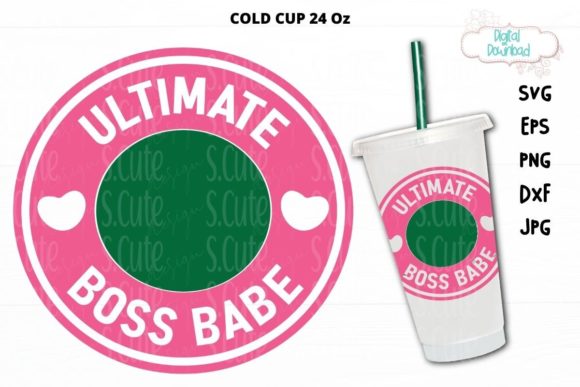
When I opened the Boss Babe Cup embroidery file, what struck me first wasn’t just the clever concept—it was how instantly usable it felt. This isn’t a fussy illustration meant only for digital display. It’s got clean lines, intentional negative space, and a confident silhouette that translates beautifully to stitch. The cup shape is generous but not oversized—ideal for center-chest placement on a sweatshirt or front-panel embroidery on a tote bag. The “Boss Babe” text sits comfortably inside, with rounded, legible lettering that avoids thin serifs or fragile terminals. As an experienced designer who’s stitched hundreds of client projects, I immediately pictured this on a soft cotton apron for a female-owned bakery, or embroidered onto a linen tea towel as a boutique wedding gift.
Where It Shines: Real Projects, Real Customers
I tested Boss Babe Cup across several real-world applications—and it held up. On a medium-weight organic cotton tote bag? Crisp, balanced, and full of personality. On a unisex crewneck sweatshirt in heather grey? The design retained its energy without overwhelming the garment. Even scaled down slightly (about 3.5" wide) for a baby onesie, the core elements remained clear—no lost detail, no muddy satin stitch fill. That’s rare in graphics marketed broadly as “SVG files.” Because while Boss Babe Cup lives in the Illustrations category and functions as a Graphics asset, its structure reads like a thoughtfully prepped machine embroidery design. It doesn’t rely on ultra-fine lines or micro-details that vanish under thread—instead, it leans into bold shapes and smart spacing.
It works especially well for small business owners building cohesive branding: think custom embroidered patches for staff uniforms, holiday gift sets with matching mugs and pillow covers, or personalized gifts for female entrepreneurs (a popular Etsy seller niche). I used it on a lightweight denim cap—yes, curved surface and all—and with light tear-away stabilizer underneath, the curves stayed smooth and the lettering didn’t pull or distort. For craft fair shoppers or boutique buyers, that kind of polish builds instant trust. It says, “This wasn’t slapped together—it was chosen with care.”
Where to Pause: Texture, Scale, and Fabric Realities
That said, Boss Babe Cup isn’t magic. Like any embroidery file, it needs thoughtful pairing with fabric and technique. On highly textured fabrics—think terry cloth towels or bouclé knit sweaters—I recommend testing first: the cup’s smooth outer edge may soften visually if stitches nestle too deeply into pile. Similarly, on very thin or stretchy fabrics (like lightweight jersey or rayon blends), skip direct hooping—use cutaway stabilizer + light spray adhesive to prevent shifting. And while the design handles dark fabric beautifully (especially with bright white or metallic thread), avoid pairing it with overly dense fill-stitch backgrounds unless you’re using high-quality thread and adjusting tension carefully—stitch density matters more than the file itself reveals.
Also worth noting: the inner text isn’t tiny, but it’s not oversized either. If you’re planning to embroider it on a curved surface like a baseball cap front panel, double-check your hoop size and digitizing software’s ability to auto-curve text. Some machines handle it gracefully; others need manual tweaks. Always inspect corners and tight curves in your embroidery software preview before stitching—especially where the cup handle meets the rim.
Design Judgment: Beyond Aesthetics, Into Value
What makes Boss Babe Cup stand out isn’t just its vibe—it’s how it supports the *entire* handmade product lifecycle. For an Etsy seller, it’s a versatile digital embroidery file that fits cleanly into mockups (I used it in both light and dark background printable mockups—no contrast issues). For a craft business owner, it’s a low-risk, high-recognition design: customers instantly “get” it, and it photographs well on social media. For a custom apparel shop, it’s a reliable go-to for last-minute orders—no digitizing delays, no licensing guesswork (though always confirm commercial rights before selling finished items).
And here’s something subtle but important: because the composition feels intentional—not overcrowded, not sparse—it elevates the perception of the finished product. A customer receiving a tote bag with Boss Babe Cup embroidered neatly in the center doesn’t see “just another graphic.” They see craftsmanship, confidence, and attention to detail. That directly impacts giftability, repeat orders, and word-of-mouth referrals.
Practical Designer Notes Before You Stitch
- Always test on scrap fabric first—especially if using textured, dark, or stretchy materials.
- Check thread color contrast early: try black thread on cream fabric, then white thread on navy—see which tells the story best for your audience.
- Review stitch density in your embroidery software. If the fill area looks unusually heavy, consider reducing density by 5–10% for breathability on apparel.
- Confirm hoop size compatibility—some versions may require a 4x4 hoop minimum, others fit snugly in 3x3. Check your extracted files.
- Inspect small details at 200% zoom: are corners sharp? Does the handle connect cleanly? These matter most when scaling down.
- Test in black-and-white mockups—this reveals clarity issues invisible in color previews.
- Use appropriate stabilizer: tear-away for stable wovens, cutaway for knits, and fusible for lightweight linens.
- Verify licensing before selling finished embroidered items or bundling Boss Babe Cup into digital product kits.
Final Thought: A Design That Works as Hard as You Do
Boss Babe Cup isn’t just a cute phrase wrapped in a mug. It’s a functional, flexible, and quietly sophisticated embroidery project starter—whether you’re stitching a single personalized gift or producing fifty custom aprons for a local co-op. It respects the craft: no hidden pitfalls, no overpromised detail, no vague promises. Just a solid, joyful, and commercially smart digital embroidery file that earns its place in your design assets—and your customers’ hands.