Cold Cup 24 Oz Svg, Future Class of 2025
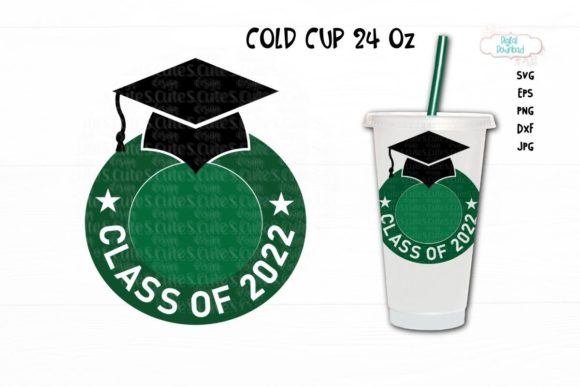
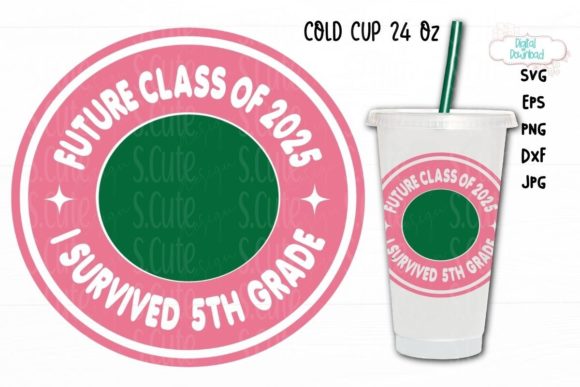
As a designer who’s stitched hundreds of graduation-themed pieces—from baby onesies to boutique aprons—I opened Cold Cup 24 Oz Svg, Future Class of 2025 expecting something cheerful but generic. Instead, I found a compact, confident illustration that lands somewhere between playful and polished. It’s not just a cup with text; it’s a small visual statement—clean lines, balanced negative space, and typography that reads clearly at 3–4 inches wide. The “24 Oz” detail adds subtle authenticity, while “Future Class of 2025” carries warmth without leaning into cliché. This isn’t a clipart afterthought—it feels like intentional Illustrations crafted for real people, not stock catalogs.
Last week, I used Cold Cup 24 Oz Svg, Future Class of 2025 to embroider a set of cotton canvas tote bags for a local high school senior’s pre-graduation pop-up shop. We paired it with a soft sage thread on natural canvas—no glitter, no puff, just clean satin stitch for the cup outline and crisp fill stitch for the text. The result? Instant recognition, zero confusion, and consistent feedback: “It looks handmade—but *intentionally* so.” That’s the sweet spot: professional enough for a small shop product, personable enough for a personalized gift.
This design shines brightest on structured, medium-weight fabrics where stitch definition holds. Think: embroidered patch blanks, twill aprons, midweight sweatshirts, or linen tea towels. On a relaxed-fit crewneck, the cup shape anchors the chest area without overwhelming it. As a machine embroidery design, it scales well between 2.8" and 4.2"—just avoid pushing below 2.2", where the “2025” numerals start losing legibility in satin stitch. It also translates cleanly to applique: cut the cup shape from contrasting fabric, then stitch the year inside with a narrow running stitch border.
Where Cold Cup 24 Oz Svg, Future Class of 2025 needs thoughtful handling is on curved or textured surfaces. Caps and beanies? Possible—but only with a low-profile hoop and tear-away stabilizer underneath. The cup’s rounded base doesn’t conform easily to domed crowns, so test placement on scrap first. Similarly, avoid dense terry cloth or heavy fleece unless you reduce stitch density manually—those fill areas can pucker or shadow unevenly. And on dark fabric? Double-check your thread contrast. A light gray cup outline vanishes on navy unless you switch to off-white or pale gold thread.
I tested it on a lightweight cotton baby onesie (size 6–12 months) using lightweight cutaway stabilizer—and it held up beautifully. No snagging, no distortion. But I’d skip it for stretchy jersey tees unless paired with a high-stability stabilizer and reduced top tension. The design’s strength lies in its simplicity, not its flexibility: it assumes a stable substrate. That makes it ideal for handmade product lines where consistency matters—think Etsy listings with clean mockups, craft fair merchandise with uniform stitching, or boutique nursery decor where parents expect heirloom-level clarity.
Visually, Cold Cup 24 Oz Svg, Future Class of 2025 builds trust fast. Customers scanning a booth or scrolling an Etsy shop don’t pause to decode symbolism—they recognize tone instantly. This design says “celebration,” “anticipation,” and “authentic milestone” in under three seconds. That’s huge for small shop product velocity. It also supports brand consistency: whether you’re selling embroidered pillow covers for dorm rooms or custom mugs for teacher appreciation, the same graphic ties your offerings together without feeling repetitive.
For Etsy sellers and digital product creators, this is a smart digital embroidery file to bundle—not as a standalone, but alongside coordinating designs (e.g., matching “Class of 2025” script, minimalist diploma icon, or monogram add-ons). Its SVG format means easy resizing in design software, but remember: SVG is a vector format, not an embroidery file. You’ll need to digitize it properly—or confirm the seller included pre-digitized PES, DST, or EXP files if you’re skipping that step. Since the listing only states “Files in High-resolution files” and “can be used with any program that accepts SVG,” always verify what’s actually inside before purchasing for commercial embroidery.
Here’s what I do before cutting into client fabric: First, I run Cold Cup 24 Oz Svg, Future Class of 2025 through a quick black-and-white mockup to assess contrast balance. Then I stitch a sample on scrap fabric—same weight, same color, same stabilizer—as the final piece. I check corners for skipped stitches, inspect letter spacing at 3x zoom, and rub the finished sample between my fingers to feel for stiffness or thread buildup. If it feels stiff, I reduce fill density by 10–15%. If the cup rim looks jagged, I smooth the vector path before digitizing. These aren’t quirks of the design—they’re standard checks for any embroidery file meant for real-world use.
One underrated strength? Its giftability. I’ve seen this design turn a plain kitchen towel into a cherished graduation hostess gift, and a simple cotton cap into a keepsake worn all summer. That emotional resonance—quiet but unmistakable—is what separates functional Graphics from meaningful design assets. It doesn’t shout. It smiles, nods, and says, “You’ve got this.”
Final note for creative entrepreneurs: Licensing matters. The listing says the file “can be used with any program that accepts SVG”—but doesn’t clarify commercial rights. If you plan to sell finished embroidered items or resell digitized versions, confirm usage terms directly with the seller. When in doubt, treat it as personal-use-only until verified. Your reputation—and your customers’ trust—depends on clean, ethical execution.
- Always test Cold Cup 24 Oz Svg, Future Class of 2025 on scrap fabric matching your final project’s weight and texture
- Use proper stabilizer—cutaway for knits, tear-away for stable wovens, fusible for lightweight linens
- Review stitch density: dense fills work on canvas, not on baby rib knit
- Check hoop size compatibility—this design fits comfortably in a 4” x 4” hoop at standard scale
- Confirm licensing before selling finished products or digital derivatives
- Compare mockups on both light and dark backgrounds to assess thread color impact