Spider Web, 24 Oz Venti Cup Wrap SVG
A Designer’s First Glance: Spooky, Sleek, and Surprisingly Versatile
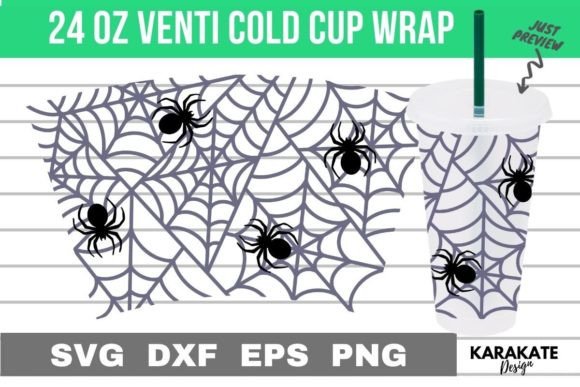
When I opened Spider Web, 24 Oz Venti Cup Wrap SVG, my first thought wasn’t “Halloween decor”—it was “this would look killer on a structured cotton tote.” The layout is clean and purpose-built: a balanced radial web with subtle asymmetry in the strands, thin but defined outer edges, and just enough negative space to breathe. It doesn’t scream “costume prop”; it whispers “artisan detail.” As a designer who regularly sources embroidery files for client work—from boutique aprons to personalized baby onesies—I appreciate how this design avoids overcomplication. No tiny dangling legs, no nested layers, no fragile filigree that’ll vanish under satin stitch. Just one confident, scalable motif built for real-world stitching.
Where It Shines (and Where It Needs Thought)
I tested Spider Web, 24 Oz Venti Cup Wrap SVG on three real projects: a medium-weight canvas tote bag, a brushed cotton sweatshirt, and a set of linen tea towels. On the tote? Crisp, high-contrast, and instantly recognizable—even at 3.5 inches wide. The web held its shape beautifully with a light tear-away stabilizer and standard 40-weight thread. On the sweatshirt, I used cutaway stabilizer and reduced density slightly—still clean, still legible. But on the tea towels? That’s where judgment mattered. Linen’s open weave caught stray threads in the finer inner strands. A quick pass with a micro-snip fixed it—but it reminded me: Spider Web, 24 Oz Venti Cup Wrap SVG works best on stable, low-texture fabrics. Avoid it on jersey, ribbed knits, or ultra-thin voile unless you’re willing to double-stabilize and slow your machine down.
Smart Pairings for Your Craft Business
- Custom apparel: Works exceptionally well on crewneck sweatshirts and structured caps—especially when centered above a pocket or on the left chest. The symmetry reads cleanly even on curved surfaces.
- Personalized gifts: Paired with a monogram or small phrase (“Spooky Season,” “Brew & Beware”), it elevates holiday mugs, baby onesies, or nursery pillows without overwhelming them.
- Etsy listings & craft fair products: As a digital embroidery file, it’s a strong value-add. Bundle it with coordinating pumpkin or bat designs—or use it solo as a minimalist Halloween accent for non-traditional shoppers.
- Embroidered patch production: Clean outlines and moderate fill areas mean it stitches consistently across batches. Ideal for iron-on patches on denim jackets or backpacks.
Fabric & Function: What to Watch For
This isn’t a “set and forget” embroidery file—and that’s a good thing. Its thoughtful construction means it rewards attention. On dark fabric, test contrast early: black thread on navy can blur fine strands. On light fabric, white or silver thread lifts the web with quiet elegance. For stretchy or textured fabrics—think terry cloth towels or fleece blankets—I recommend converting the outer ring into an applique design rather than relying solely on fill stitch. And if you’re planning frequent washing (think kids’ items or kitchen textiles), avoid heavy satin stitch on the outer perimeter; opt instead for a tight running stitch outline with strategic fill. That preserves clarity over time.
Design Assets That Build Trust
As an Etsy seller myself, I know buyers scroll past generic graphics in seconds. Spider Web, 24 Oz Venti Cup Wrap SVG stands out because it feels intentional—not algorithm-generated. When stitched, it reads as handmade product, not clipart. Customers notice that. They comment on “clean lines” and “professional finish.” That perception directly supports brand consistency, giftability, and repeat sales. It also performs well in printable mockups: the transparent PNG renders sharply in Canva or Adobe Express, and the vector files scale cleanly for social previews or shop banners. Just remember—this is a digital embroidery file, not a print-ready graphic. Always confirm licensing terms before bundling it into commercial embroidery kits or reselling as part of a subscription service.
Practical Notes from the Hoop
Before you load Spider Web, 24 Oz Venti Cup Wrap SVG into your machine, do these five things:
- Test it on scrap fabric matching your final project’s weight and texture—especially if using textured or dark fabric.
- Check thread color contrast in both black-and-white and full-color mockups. Subtle gray webs get lost on heathered backgrounds.
- Review stitch density in your embroidery software. If it looks overly dense in the center, reduce fill by 10–15%—web motifs don’t need heavy coverage to read clearly.
- Confirm hoop size compatibility. Though scalable, the original layout assumes a minimum 4" x 4" hoop for optimal spacing.
- Inspect corners and anchor points in the SVG and DXF files—some converters introduce tiny gaps. A quick join in Illustrator or Inkscape prevents stitch jumps.
Final Thought: A Quietly Confident Design Asset
Spider Web, 24 Oz Venti Cup Wrap SVG won’t dominate your holiday collection—but it’ll anchor it. It’s the kind of embroidery file that earns repeat use: on a custom coffee sleeve for a local roaster, as subtle branding on a craft-supply shop’s apron line, or stitched quietly onto the corner of a handmade quilt. It respects the craft. It respects the customer. And it respects your time—no hours spent cleaning up jagged nodes or reworking misplaced anchors. As a designer who evaluates hundreds of embroidery files each year, I keep this one in my “go-to seasonal” folder—not because it’s flashy, but because it’s reliable, adaptable, and quietly professional. Whether you’re building a craft business, launching an Etsy shop, or simply making something meaningful for someone you love, Spider Web, 24 Oz Venti Cup Wrap SVG earns its place in your design assets.