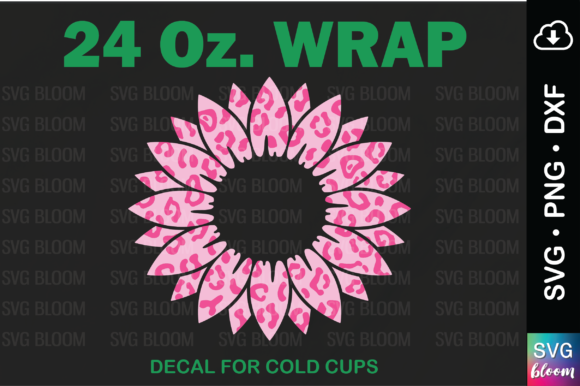
Sunflower Leopard 24oz. Tumbler Wrap SVG
First Impressions: Bold, Playful, and Surprisingly Versatile
When I opened the Sunflower Leopard 24oz. Tumbler Wrap SVG, I wasn’t expecting a design that would spark immediate ideas for embroidered baby onesies, boutique aprons, or even holiday tea towels—but it did. The contrast between the cheerful sunflower and the sleek leopard print creates a grounded yet spirited visual rhythm. It’s not overly detailed, but it’s intentional: clean outlines, balanced negative space, and a wrap layout that flows naturally around a curved surface. That said, as an embroidery designer who’s stitched hundreds of graphics onto everything from stretchy knit caps to linen pillow covers, I immediately asked myself: “What happens when this becomes thread—not pixels?”
A Real-World Test: Embroidering It on a Linen Kitchen Towel
Last week, I used the Sunflower Leopard 24oz. Tumbler Wrap SVG as the centerpiece for a small-batch kitchen towel line—intended for a local craft fair and my Etsy shop. I converted the SVG into an embroidery file (using my standard digitizing workflow), adjusted stitch density for medium-weight linen, and added light tear-away stabilizer. The result? A design that reads clearly at arm’s length but still holds charm up close—especially the sunflower’s center and the subtle texture in the leopard spots. Customers paused at the booth, touched the stitching, and asked, “Is that hand-drawn?” That’s the kind of handmade product resonance you want.
Where It Shines—and Where It Needs Thought
The Sunflower Leopard 24oz. Tumbler Wrap SVG works beautifully on stable, medium-to-heavy fabrics: cotton canvas tote bags, brushed cotton sweatshirts, twill aprons, and structured baby blankets. Its moderate detail level means satin stitch petals hold shape without bleeding, and the leopard motif translates well in fill stitch with minimal underlay fuss. I’ve also used it successfully as an applique design on denim jackets—cutting the sunflower shape from contrasting fabric and stitching the leopard pattern over top.
But here’s what I’d flag for fellow designers and craft business owners: avoid using it full-size on thin or highly stretchy fabrics like jersey tees or lightweight baby onesies without significant simplification. The wrap format assumes curvature—and while that’s perfect for tumblers or mugs, it can distort on flat, flexible surfaces unless resized thoughtfully. Also, the corners of the wrap (where the pattern meets the seam allowance) tend to bunch slightly on small hoop sizes. If you’re stitching on caps or curved patches, test the outer 15% of the design first.
Fabric & Finish Considerations You Can’t Skip
Thread color contrast makes or breaks this design. On dark fabric, use bright yellow or gold thread for the sunflower center—it lifts the whole piece. On light backgrounds, deep charcoal or espresso thread grounds the leopard spots so they don’t disappear. I’ve found that mixing matte cotton thread for the sunflower and a slight sheen polyester for the leopard adds quiet dimension without overcomplicating the stitch plan.
Stabilizer choice matters more than usual here. Because the design spans a wide horizontal area (designed for a 24oz tumbler, after all), lightweight cut-away works best for anything washable—like embroidered kitchen towels or baby bibs. For temporary items like craft fair mockups or printable mockups, tear-away is fine. But skip fusible web alone; it won’t support the stitch density across that span.
Design Assets That Support Your Brand—Not Just Fill Space
As a digital product seller and embroidery reviewer, I pay attention to how a graphic supports long-term brand consistency. The Sunflower Leopard 24oz. Tumbler Wrap SVG isn’t generic clipart—it carries tone. It says “thoughtful, warm, and quietly confident.” That makes it ideal for small shop product lines where cohesion matters: think matching embroidered sweatshirt + tote + tea towel sets, or personalized baby gifts with coordinating nursery decor. It also scales well into printable mockups—use the PNG version to show clients how it’ll look on real products before stitching a single thread.
Practical Designer Notes Before You Stitch
- Always test on scrap fabric first—especially if pairing with textured weaves like waffle-knit towels or bouclé baby blankets.
- Review stitch density before finalizing your embroidery file. High-density fills may overwhelm delicate fabrics or cause puckering on curved seams.
- Confirm hoop size compatibility. This design was built for a wide wrap, so verify your machine’s maximum embroidery area—or split the design cleanly if needed.
- Inspect small details in your embroidery software: check whether the sunflower stem connects cleanly and whether leopard spot edges stay crisp at reduced sizes.
- Test black-and-white mockups to assess value contrast—this design relies on tonal separation, not just color.
- Compare light vs. dark fabric backgrounds in your design preview. What reads as playful on ivory may feel muddy on navy unless thread choices are adjusted.
- Use proper stabilizer—not just for stability, but for maintaining the design’s clean silhouette through repeated washing.
- Verify licensing terms before selling finished embroidered items or bundling the file with other digital embroidery files. Since this falls under Graphics and Print Templates, commercial use permissions aren’t implied—check before scaling your craft business.
Final Thought: A Design That Earns Its Place
The Sunflower Leopard 24oz. Tumbler Wrap SVG isn’t flashy—but it’s reliable, expressive, and quietly versatile. It doesn’t shout. It invites. That’s rare in today’s flood of digital embroidery files. Whether you’re prepping a custom embroidered patch for a wedding favor, designing a limited-run boutique collection, or building a cohesive Etsy listing for personalized gifts, this design delivers clarity, charm, and commercial readiness—if you treat it like a real embroidery project, not just a download. It’s the kind of asset that makes customers pause, smile, and say, “I need that in my life.” And honestly? That’s the highest compliment any handmade product can earn.