Tulips Line Venti Cup Wrap SVG
As a designer who’s stitched hundreds of custom projects—from boutique baby onesies to Etsy best-selling tote bags—I opened Tulips Line - 24 Oz Venti Cup Wrap SVG expecting something light, springy, and commercially versatile. What I found wasn’t just a floral wrap; it was a quietly confident design that leans into elegance without overcomplicating itself. It’s the kind of embroidery file that feels like it belongs on a ceramic mug sleeve—but also works beautifully scaled down on a linen tea towel or upcycled denim apron.
A First Impression That Stitches Well
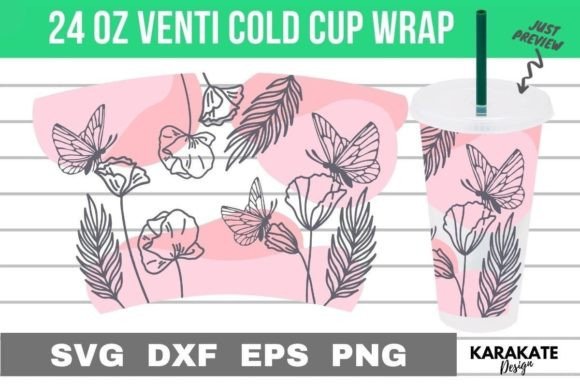
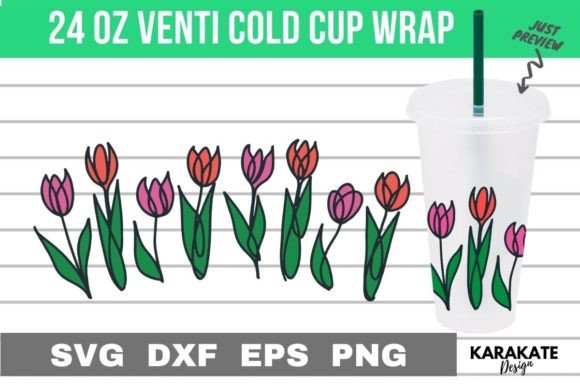
The moment you preview the SVG, DXF, EPS, and PNG files, the rhythm of the tulip line becomes clear: balanced spacing, consistent stem weight, and gentle curve flow that follows the natural arc of a 24 oz venti cup. No jagged edges, no awkward gaps between blooms—just clean, intentional negative space. That matters more than most designers admit. In machine embroidery, negative space isn’t empty—it’s breathing room for stabilizer, thread tension, and fabric movement. This design understands that.
It reads as soft but structured—ideal for handmade products where customers want “thoughtful,” not “fussy.” Think: a small shop owner adding embroidered flair to reusable coffee sleeves sold alongside local roasters’ beans. Or an Etsy seller bundling personalized mugs with matching wraps for Mother’s Day. The tulips aren’t overly detailed, so they won’t drown in satin stitch density or vanish on textured fabrics—but they’re distinct enough to read clearly at 3–4 inches wide.
Where It Shines (and Where It Asks for Care)
I tested Tulips Line - 24 Oz Venti Cup Wrap SVG across three real-use cases: a cotton-linen blend tea towel, a midweight unstructured cap, and a brushed poly-cotton sweatshirt. On the towel? Crisp, airy, and gift-ready—especially when paired with subtle cream or sage thread. On the cap? It held up well *if* hooped correctly and backed with medium tear-away stabilizer—but the curved surface did compress the outermost tulip slightly. A reminder: this isn’t a “drop-in-and-stitch” cap design. It’s better suited to flat or gently contoured surfaces like tote bags, pillow covers, or aprons.
On the sweatshirt, the design kept its shape, but I noticed the lower stems softened a bit where fabric stretch met stitch density. Not a flaw—just reality. If you’re planning Tulips Line - 24 Oz Venti Cup Wrap SVG for knits or thin jersey, add cut-away stabilizer and reduce stitch speed by 15%. And avoid layering it over seams or side panels unless you’ve pre-tested seam allowances.
- Best for: Cotton totes, linen napkins, baby onesies (as a simplified wrap motif), nursery wall hangings, holiday kitchen bundles, boutique coffee shop merch.
- Use carefully on: Stretchy fabrics without proper stabilization, dark fabrics with low-contrast thread, tiny hoops under 4x4”, or heavily textured weaves like burlap or thick terry cloth.
- Avoid for: Dense applique layouts, multi-color lettering combos, or designs requiring fine interior detail—the tulips are graceful, not intricate.
What It Adds to Your Finished Product
This isn’t just decoration. Tulips Line - 24 Oz Venti Cup Wrap SVG elevates perceived value because it feels intentional—not clip-art casual. Customers notice when a design has visual weight and cohesion. On a plain canvas tote, it transforms utilitarian into curated. On a baby blanket edge, it whispers “handmade care,” not mass production. That quiet professionalism builds trust, especially for craft businesses selling on Etsy or at local markets.
It also supports brand consistency. Because the layout is linear and modular, you can easily pair it with minimalist monograms or coordinate it with other spring-themed embroidery files—say, a single tulip motif for patches or a smaller version for tag labels. As a digital embroidery file, it’s flexible: use the SVG for Cricut-based iron-on transfers, the EPS for vector scaling in Illustrator, or the high-res PNG for printable mockups in your shop listings.
Practical Designer Notes Before You Stitch
Before committing thread, time, or client expectations to Tulips Line - 24 Oz Venti Cup Wrap SVG, here’s what I’d do:
- Test on scrap fabric first—especially if using textured or dark material. Check how stem lines hold up and whether petals bloom cleanly.
- Review thread color contrast. Light tulips on navy look refined, but pale yellow on ecru can disappear. Try black-and-white mockups to assess clarity.
- Confirm hoop size compatibility. While it’s built for a venti wrap, you may need to resize for smaller items—just verify proportions stay balanced after scaling.
- Inspect small details in your embroidery software: Are stem ends tapered? Do petal curves remain smooth at reduced sizes? Zoom in.
- Use appropriate stabilizer—medium-weight tear-away for stable wovens, cut-away for knits or lightweight cottons.
- Check licensing terms before selling finished embroidered items or reselling the digital embroidery file. This is a Graphics asset meant for Crafts—confirm commercial use rights directly with the source.
Final Thought: A Design That Works Quietly, Not Loudly
Tulips Line - 24 Oz Venti Cup Wrap SVG won’t shout. It doesn’t need to. Its strength lies in reliability—clean lines, consistent spacing, and a mood that fits spring markets, baby showers, café branding, or thoughtful gifting. It’s the kind of embroidery file that makes your craft business feel cohesive, not cluttered. For small shop owners and Etsy sellers, that consistency compounds: one well-chosen design, repeated thoughtfully across product types, builds recognition faster than ten flashy but disjointed motifs.
If you’re building a collection of digital embroidery files for commercial use—or simply want a graceful, stitch-ready tulip motif that behaves on real fabric—this is a grounded, practical choice. Not perfect for every surface, but perfectly suited for the right ones.