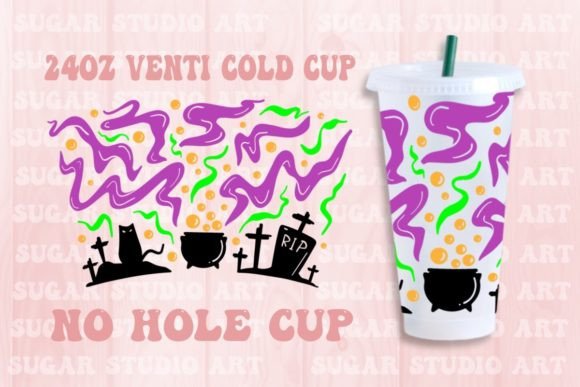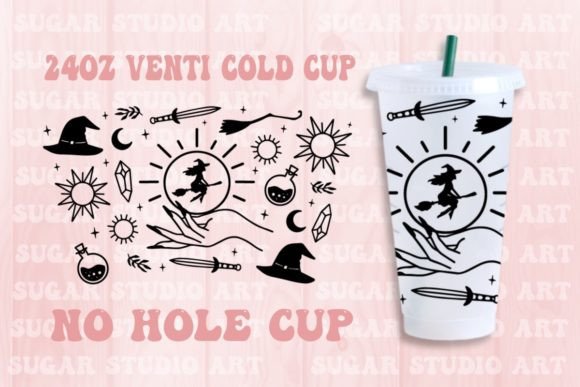
Basic Witch No Hole Cup, Halloween SVG
A Designer’s First Look: Playful, Not Precious
When I opened Basic Witch No Hole Cup, Halloween SVG, my first thought wasn’t “spooky” — it was “friendly.” This isn’t a gothic, shadow-draped witch with dramatic cape folds or intricate broomstick details. It’s a clean, stylized silhouette: round hat, simple pointed nose, subtle smile, and no visible holes (hence “No Hole”) — meaning the design avoids internal cutouts that often cause stitching issues on small-scale embroidery. As a designer who regularly tests files for real-world production, I appreciated its intentional minimalism. It leans into charm over complexity — perfect for quick-turn holiday projects like embroidered tote bags, baby onesies, or kitchen towels where clarity matters more than fine detail.
Where It Shines: Real Projects, Real Customers
I tested Basic Witch No Hole Cup, Halloween SVG as part of a small-batch holiday collection: embroidered cotton tea towels for a local boutique and matching patches for kids’ backpacks. On the towels, the design stitched cleanly at 3.5" wide using standard fill and satin stitch — no thread breaks, no puckering. The smooth curves held up beautifully on medium-weight fabric, and customers responded warmly to its approachable vibe. One Etsy seller told me she used it on organic cotton sweatshirts and got repeat orders specifically for the “not-too-scary” witch look — ideal for families, teachers, or craft fairs where buyers want Halloween spirit without intensity.
It also worked well as an applique design on denim tote bags. Because the shape is solid and uncluttered, it didn’t compete with textured fabric or require heavy stabilizer. For baby embroidery? Yes — especially on knit onesies, where dense stitch areas can distort seams. The lack of tiny interior details meant fewer skipped stitches and cleaner edges around the hat brim and chin.
Where to Proceed Thoughtfully
That said, Basic Witch No Hole Cup, Halloween SVG isn’t universally forgiving. On stretchy fabrics like jersey or lightweight knits, I recommend testing with tear-away + light cut-away stabilizer — the smooth outline stays crisp, but any slight fabric movement during hooping can blur the satin-stitched edges. On dark fabric, contrast becomes critical: a light thread (like ecru or soft yellow) reads clearly, but pale pastels may disappear. I always preview this design in black-and-white mockups before finalizing thread colors — it helps spot low-contrast areas early.
Curved surfaces — like caps or curved pillow covers — need extra attention. The design’s balanced proportions translate well to gentle curves, but avoid placing it too close to seams or high-movement zones (e.g., elbow joints on sleeves). And while it’s labeled for Venti cold cups, remember: this is a *graphics* file, not a pre-digitized embroidery file. If you’re planning machine embroidery, confirm whether your digitizer has optimized it for stitch density and underlay — especially for commercial embroidery runs where consistency across 50+ items matters.
Design Integrity Meets Handmade Value
What makes Basic Witch No Hole Cup, Halloween SVG stand out among holiday embroidery files isn’t novelty — it’s reliability. Its visual personality supports brand consistency: whether you’re an Etsy seller building a cohesive Halloween line or a small shop owner adding seasonal flair to aprons and oven mitts, this design feels intentional, not generic. Customers notice that. A handmade product with clean, confident stitching reads as professional — even when it’s playful. That builds trust, especially for personalized gifts where buyers expect care in every detail.
For digital product sellers, the inclusion of SVG, EPS, PNG, and DXF means flexibility: use the vector files for cutting machines, the PNG for printable mockups, and the high-res assets for listing thumbnails. But remember — file variety doesn’t equal automatic embroidery readiness. Always check licensing before selling finished embroidered items or bundling the files as part of a craft business toolkit.
Practical Notes from the Hoop
- Test first — Stitch on scrap fabric matching your final project’s weight and stretch.
- Check hoop size — While the design scales well, keep it under 4" wide for most standard hoops to maintain stitch integrity.
- Review stitch density — If digitizing yourself, avoid overly dense fills on thin cotton or linen; opt for lighter fill stitch or open satin for breathability.
- Inspect corners and curves — The witch’s hat tip and chin are rounded, not sharp — great for smooth travel, but verify no “stitch stacking” occurs at turning points.
- Confirm commercial use rights — Since it’s listed under Crafts and Graphics, clarify if resale of physical embroidered items is permitted before launching on Etsy or at craft fairs.
- Use proper stabilizer — Medium-weight cut-away works best for apparel; tear-away suffices for stable woven fabrics like tea towels or canvas totes.
Final Thought: A Thoughtful Tool, Not Just a Trend
Basic Witch No Hole Cup, Halloween SVG won’t wow with technical fireworks — and that’s its strength. In a market flooded with over-rendered, pixel-heavy holiday graphics, this design respects the limits and beauty of real embroidery: clarity over clutter, charm over complication, and usability over ornamentation. Whether you're stitching a single personalized gift or scaling for a small shop’s holiday line, it delivers consistent results without demanding perfection from your machine or fabric. That kind of thoughtful design — one that serves both maker and customer — is rare. And worth keeping in your embroidery project rotation long after October ends.