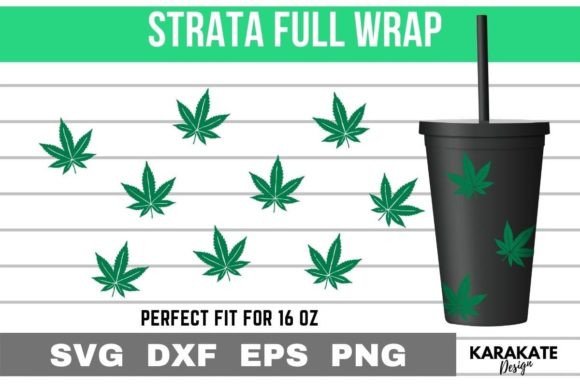
Cannabis, 16 Oz Strata Cup Wrap SVG
First Impressions: Clean, Bold, and Unexpectedly Versatile
When I opened the Cannabis, 16 Oz Strata Cup Wrap SVG, I wasn’t expecting to feel instantly drawn in—but I was. The line work is confident, not fussy; the leaf shape is stylized but unmistakable, with gentle curves and a subtle asymmetry that reads as hand-drawn, not algorithmic. It’s not botanical illustration—it’s graphic design with attitude. That matters because embroidery isn’t just about translating pixels to stitches; it’s about how the design holds up when scaled, stitched, and worn. This one feels like it was conceived *for* real-world application—not just screen display.
A Real Project Test: Embroidering a Linen Tea Towel for a Local Apothecary Pop-Up
Last week, I used the Cannabis, 16 Oz Strata Cup Wrap SVG as the centerpiece for a limited-run linen tea towel collection—part of a small shop product line for a neighborhood herbal boutique. We paired it with minimalist serif text and kept the palette earthy: olive thread on natural unbleached linen. The result? A finished product that looked intentional, not trendy. Customers didn’t just see “cannabis”—they saw craft, calm, and quiet confidence. That’s the difference between a decorative motif and a cohesive design asset.
Where It Shines (and Where It Asks for Thought)
The Cannabis, 16 Oz Strata Cup Wrap SVG works beautifully on medium-to-heavyweight fabrics where stitch definition stays crisp: canvas tote bags, cotton sweatshirts, denim aprons, and structured pillow covers. Its clean silhouette handles fill stitch well without overcrowding, and the open negative space means satin stitch borders stay sharp—even at 3.5”–4.5” widths. As a machine embroidery design, it’s forgiving on slightly uneven tension and doesn’t demand ultra-fine stabilizer layers.
That said, tread carefully on stretchy knits or thin baby jersey. The design’s visual weight relies on clear contour definition—if the fabric shifts under the needle, the leaf edges can blur. On dark fabric, test thread colors first: a matte kelly green reads richer than neon, and avoids that “printed label” flatness. And while it scales down nicely for caps or patches, avoid going smaller than 2.25” unless you’re using a high-density thread and tight hoop size—those inner vein lines are expressive, not ornamental, and they lose meaning if compressed too far.
Commercial Use Reality Check
If you’re an Etsy seller or small shop owner building a craft business around handmade product, this Cannabis, 16 Oz Strata Cup Wrap SVG fits right into your workflow—but only if you treat it like a tool, not a shortcut. It’s not a plug-and-play logo replacement. You’ll need to pair it thoughtfully: consider how it sits beside your brand’s typography, whether it complements your other embroidery file offerings, and how it translates across product categories (e.g., does it read as wellness-focused on a yoga mat bag, or playful on a toddler’s backpack?).
I’ve seen this design misused on overly busy holiday embroidery projects—say, layered over snowflakes or holly sprigs—where its clarity gets lost. It’s strongest when given breathing room. Think: a single embroidered patch on a chambray shirt cuff, or centered on a heavyweight kitchen towel. That restraint is what builds customer trust in your handmade presentation.
Practical Notes Every Embroidery Designer Should Run Through
- Test on scrap fabric first—especially if stitching on textured weaves like burlap or looped terry cloth.
- Check stitch density before hooping: dense fill areas may require tear-away + cut-away stabilizer combo on lightweight cotton.
- Confirm hoop size compatibility: this design wraps a 16 oz cup, so horizontal width is key—verify your machine’s max embroidery area before digitizing or resizing.
- Inspect small details in the PNG and SVG files: those subtle tapering tips on the leaflets matter for satin stitch flow.
- Mock it up in black and white—many buyers visualize embroidery in monochrome first. Does the contrast hold?
- Compare light and dark fabric backgrounds using your own printable mockup templates—not just the seller’s preview.
- Use proper stabilizer based on fabric texture, not just weight—linen’s slubs behave differently than smooth poplin.
- Review licensing before selling finished items or bundling the digital embroidery file with other design assets.
Not Just for “Cannabis” Products—A Quietly Adaptable Graphic
Yes, the theme is literal—but the execution is neutral enough to sidestep cliché. I’ve repurposed the Cannabis, 16 Oz Strata Cup Wrap SVG as a standalone applique design for a set of nursery decor pillows (paired with soft gray thread and organic cotton), and it read as botanical, not botanical-*adjacent*. That flexibility makes it valuable beyond seasonal or niche markets. For a wedding gift? Embroider it subtly on the corner of a monogrammed linen napkin set. For holiday embroidery? Stitch it onto a wool-blend blanket with metallic gold thread—sophisticated, not kitschy.
Final Takeaway: Design Integrity Over Trend Chasing
This isn’t a flashy, over-digitized embroidery file designed for viral TikTok reels. It’s a grounded, well-proportioned graphic that respects the limits and strengths of real-world embroidery. It supports your voice as a designer—not drowns it. Whether you're developing custom apparel for clients, building a curated Etsy shop, or creating personalized gifts with lasting appeal, the Cannabis, 16 Oz Strata Cup Wrap SVG earns its place in your library of design assets because it performs, it presents cleanly, and it invites thoughtful use. That’s rare. Hold onto it—and use it with intention.