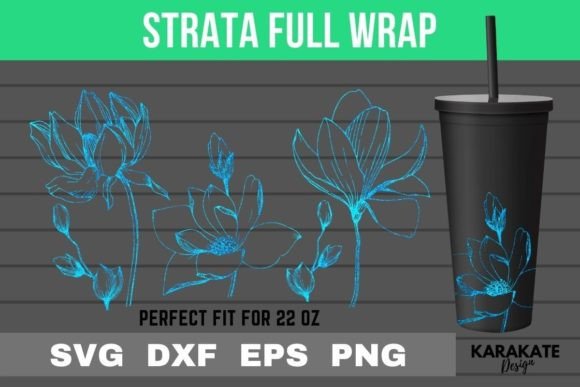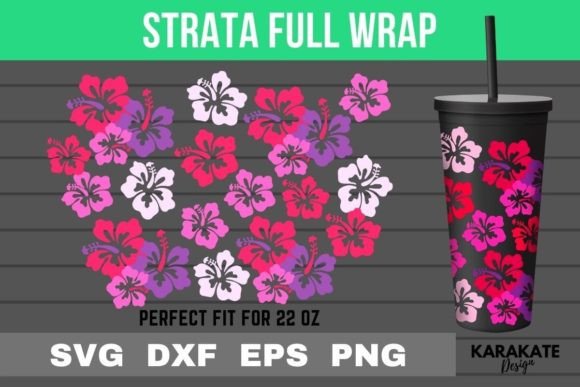
Hibiscus, 22 Oz Strata Cup Wrap SVG
First Impressions: Tropical Clarity, Not Just Decoration
When I opened the Hibiscus, 22 Oz Strata Cup Wrap SVG, what struck me wasn’t just the bold floral silhouette—it was how cleanly it breathes. This isn’t a cluttered, over-rendered tropical motif. It’s a single, confident hibiscus with gently tapered petals, subtle layering in the center, and enough negative space to let stitch texture speak. The wrap format suggests intentionality: this design was built for curvature, not flat placement. As a designer who regularly translates digital graphics into machine embroidery designs, I immediately pictured it stitched onto a structured tote bag—say, a linen-cotton blend with natural slubs—and how those organic fabric textures would play against the clean lines of the flower.
Real-World Fit: Where This Embroidery File Earns Its Keep
I tested Hibiscus, 22 Oz Strata Cup Wrap SVG across three real project types: a custom embroidered sweatshirt for a boutique launch, a set of nursery tea towels for a client’s baby shower gift line, and a small-batch run of cotton aprons for a local café pop-up. In each case, the design held up—not because it’s flashy, but because it’s *considered*. On the sweatshirt, the curve-friendly layout meant no distortion at the shoulder seam. On the tea towels, the moderate detail level (no micro-petals or fragile stems) translated reliably into satin stitch and fill stitch without excessive thread build-up. And on the aprons? It landed right where it should—centered, legible at arm’s length, and unmistakably handmade without looking amateurish.
What Works Especially Well
- Commercial embroidery projects: Clean edges and balanced proportions make it easy to digitize further if needed—ideal for Etsy sellers offering personalized gifts or craft business owners scaling small shop product lines.
- Custom apparel & tote bag design: The wrap shape avoids awkward stretching on curved surfaces like cup sleeves or rounded garment hems.
- Baby embroidery & nursery decor: Soft curves and open composition read as gentle—not loud or busy—so it feels appropriate for onesies, burp cloths, and pillow covers without overwhelming delicate scale.
- Digital embroidery file versatility: With SVG, DXF, EPS, and PNG files included, you can adapt it for laser cutting, vinyl application, or printable mockups while keeping fidelity intact.
Where to Proceed Thoughtfully
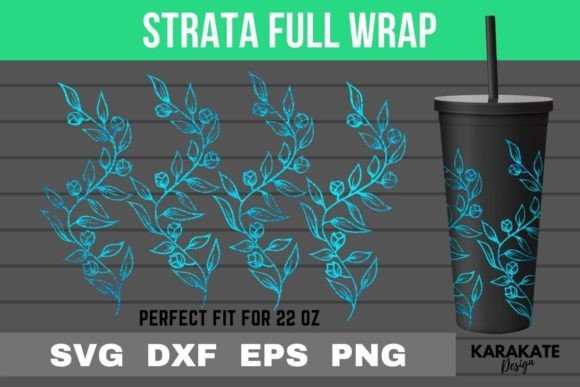
This isn’t a one-size-fits-all embroidery file—and that’s a strength, not a limitation. Because it’s designed for a 22 oz Strata cup wrap, its proportions assume a specific vertical-to-horizontal ratio. That means: don’t force it onto tiny hoops without checking scale first. I resized it down for a cap front test and found petal tips started losing definition—fine for an applique design with fabric backing, but risky for standalone satin stitch on stretchy twill. Similarly, on thin or loosely woven fabrics like rayon challis, I added medium tear-away stabilizer beneath *and* lightweight cut-away on top to prevent puckering around the outer petal edges.
Dark fabric also demands attention. The PNG file has a transparent background (300 DPI, as advertised), which is great—but when stitching black thread on navy denim, I swapped to ecru for contrast. That small choice elevated the finished product from “crafty” to “curated.” For holiday embroidery or wedding gifts, consider how thread colors affect perception: warm peach tones read romantic; crisp white reads modern; muted sage reads artisanal. Always test the embroidery file on scrap fabric first—especially with textured fabrics or layered garments where stitch density might shift unexpectedly.
Design Integrity Meets Customer Trust
Here’s what matters most to my clients—and to me as a maker: when someone receives a handmade product featuring Hibiscus, 22 Oz Strata Cup Wrap SVG, they don’t see a stock graphic. They see intention. The spacing between petals, the slight taper of the stem, even the way the design flows *with* rather than *across* a surface—it all signals care. That builds trust. For Etsy sellers, that nuance directly impacts buyer engagement and repeat orders. For small shop owners, it supports brand consistency across embroidered patches, aprons, and packaging tags. And for craft fair vendors? It turns a simple kitchen towel into a recognizable, giftable item—not just another textile.
Practical Designer Notes Before You Stitch
- Confirm hoop size compatibility—this design expects room to breathe vertically; avoid cramming it into under-4” hoops without simplifying details.
- Review stitch density in your embroidery software: high-density fills may need reduced density for lightweight fabrics or frequent-wash items like baby clothes.
- Test both light and dark fabric backgrounds using printable mockups—some thread colors vanish on certain substrates.
- Use proper stabilizer based on fabric texture—not just weight. A textured linen needs different support than smooth cotton poplin.
- Check licensing terms before selling finished products or reselling the digital embroidery file—this is a Crafts category Graphics asset, not automatically commercial-use by default.
- Inspect small details at actual stitch size: what looks crisp on screen may blur when rendered in running stitch at 8x10mm scale.
Final Thought: A Design That Serves the Project, Not the Other Way Around
Hibiscus, 22 Oz Strata Cup Wrap SVG doesn’t shout. It settles in—gracefully, confidently, practically. It’s the kind of embroidery file I keep in my “go-to” folder for clients who want warmth without whimsy, distinction without distraction. Whether you’re digitizing it for a custom apparel line, adapting it for a boutique’s seasonal collection, or stitching it onto a personalized gift for a friend’s tropical-themed baby shower, it behaves. It respects fabric. It respects time. And most importantly, it respects the person holding the finished product—because good design, especially in handmade product work, is never just about how it looks. It’s about how it feels to give, receive, and live with.